Nixtamalization: the invention that made the tortilla possible
More than three thousand years ago, someone cooked corn with lime. That gesture sustained whole civilizations and is still in every taco.
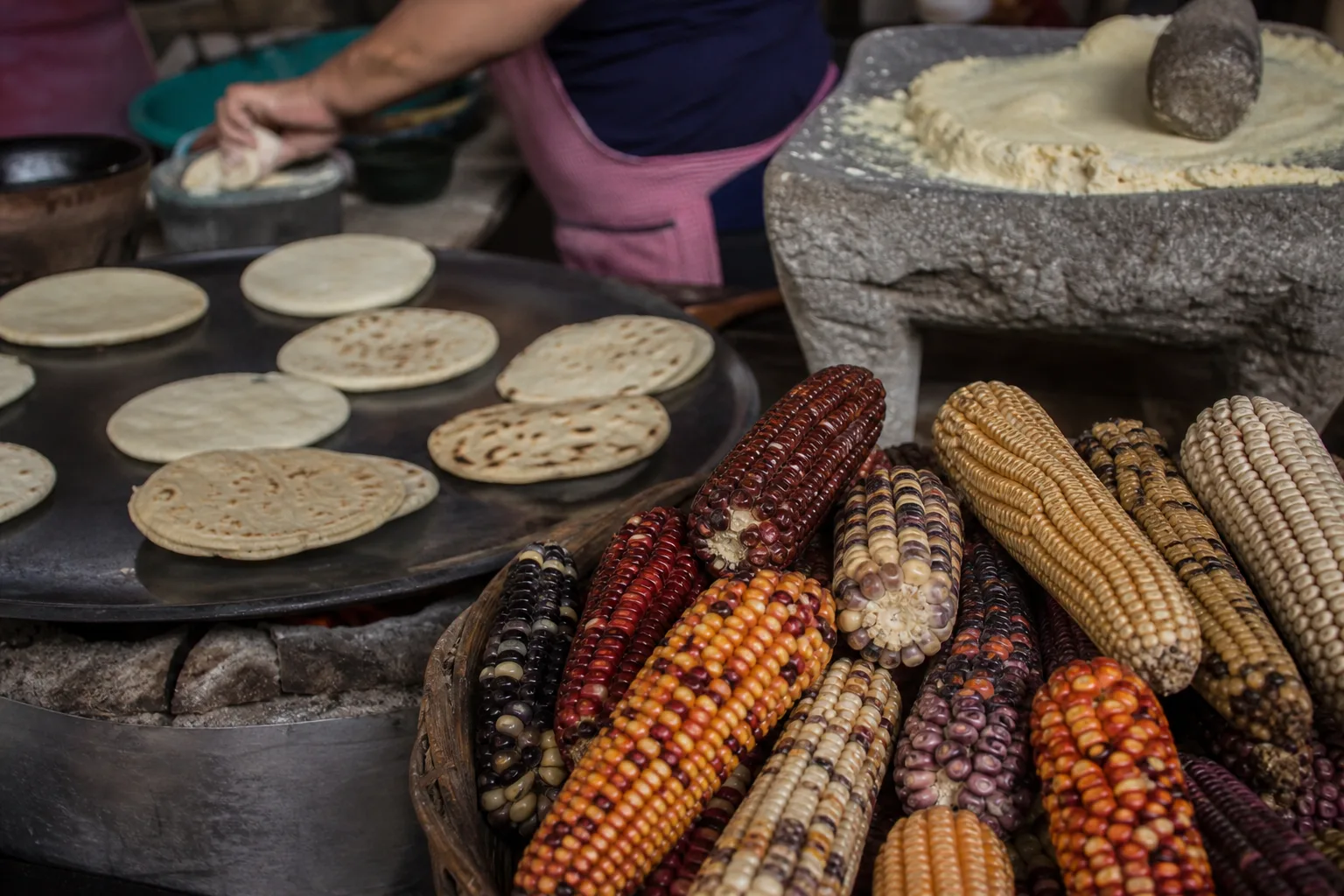
A tortilla looks like the simplest thing in the world. Behind it lies one of the most ingenious food technologies in history: nixtamalization.
What it is
Dried corn is cooked and left to soak in water with lime (calcium hydroxide) or ash. It is then rinsed and ground. The result is nixtamal; ground, it becomes the masa used for tortillas, tamales and tlacoyos. The word comes from Nahuatl: nextli, ash, and tamalli, dough.
What it does
The process softens the kernel and lets the skin come off. But above all it changes its chemistry: it releases niacin (vitamin B3), adds calcium and makes the dough hold together. Without nixtamalization, ground corn does not form tortillas.
When corn traveled to Europe and Africa without this technique, a disease came with it: pellagra.
A history lesson
Wherever corn became a staple without being nixtamalized, lack of niacin caused pellagra epidemics for centuries. Mesoamerica never suffered them.
With beans
Corn and beans, grown together in the milpa, complement each other: the proteins in one make up for what the other lacks.
Today
Traditional Mexican cuisine has been UNESCO intangible heritage since 2010. Many tortilla shops are returning to native corn and daily-made nixtamal. You can smell it before you walk in.
Trying it at home
The easiest way to taste the difference is to find a tortilla shop that works with nixtamalized corn rather than industrial flour: the tortillas smell of corn, are more flexible and do not crack when folded. To cook at home, nixtamalized corn flour — masa harina — is sold in many supermarkets. Just mix it with warm water and a pinch of salt, roll it into balls, flatten them and cook them in a very hot pan.