Flamenco for beginners: what a palo is and how to follow the rhythm
Soleá, bulería, alegrías, seguiriya: a minimal guide to listening to flamenco without getting lost.
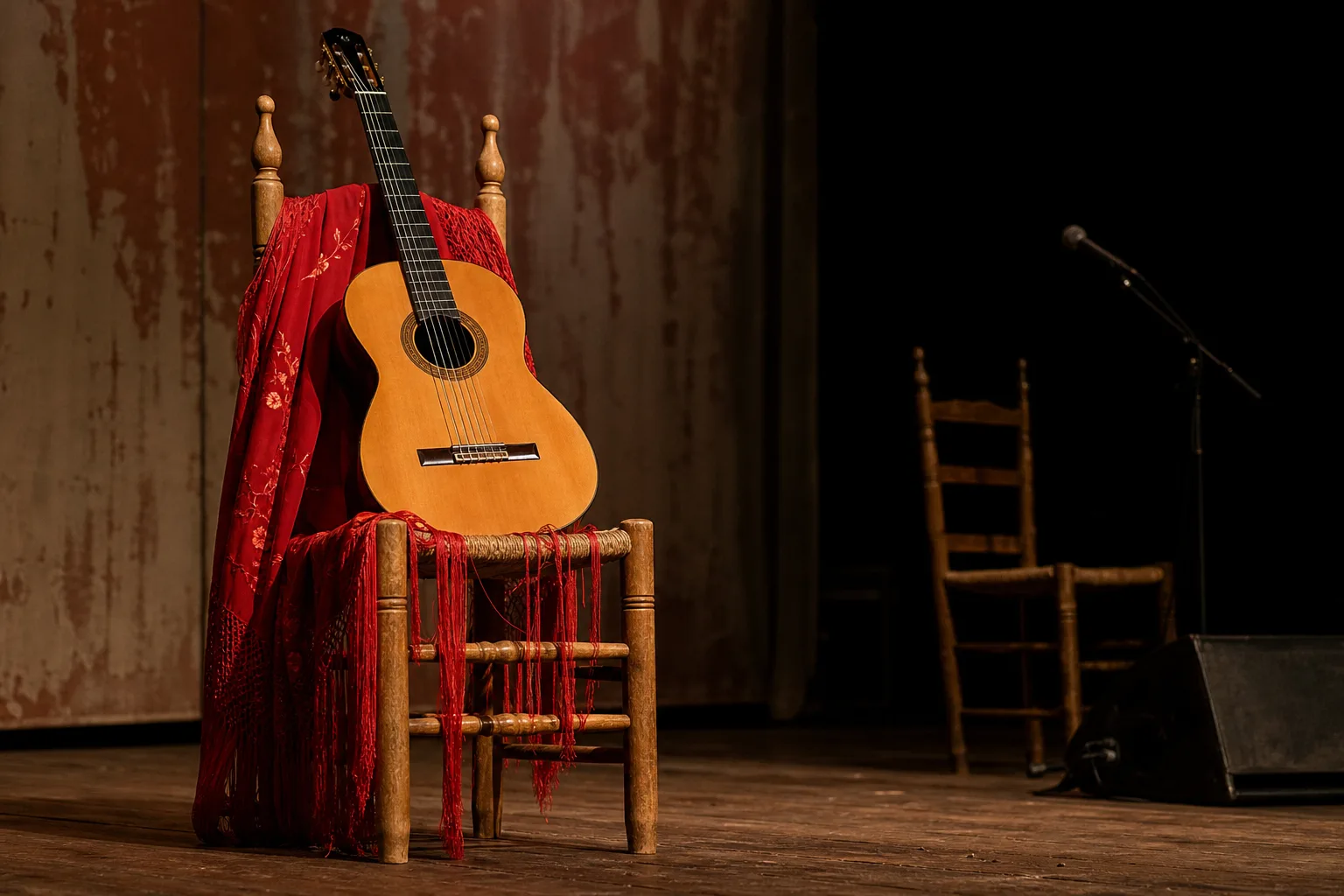
Flamenco is not one style but a family of forms called palos. Each palo has its rhythm, its character and often its place of origin. Knowing four is enough to start finding your way.
The count of twelve
Many palos are counted in cycles of twelve beats, with accents in fixed places. In soleá and bulería, the accents fall on 3, 6, 8, 10 and 12. Handclaps mark that pattern; follow them and you are in.
Four palos
Soleá is slow and solemn; many consider it the mother of flamenco song. Bulería, born in Jerez, uses the same count at full speed and is the palo of the party. Alegrías, from Cádiz, are bright and of the sea. Seguiriya is the most tragic, with an uneven count that seems to limp.
In flamenco, silence is played too: what the singer holds back is part of the rhythm.
What to listen to
La leyenda del tiempo (1979), by Camarón de la Isla, opened flamenco to new sounds. Paco de Lucía took the guitar to the world's stages. And among today's voices, any live recording will let you hear the essentials: song, guitar, handclaps and shouts of encouragement.
Song, guitar and dance
Flamenco stands on three legs. The cante, the singing, is the origin and the center; the toque, the guitar, was born to accompany it and ended up with a life of its own; and the baile, the dance, is what outsiders see most. Add to these the handclaps and the jaleo, the shouts of encouragement. If you hear an "¡olé!" at an odd moment in a tablao, it is not bad manners: it is part of the music.