How to listen to a symphony without getting lost
Four movements, a couple of rules and no fear of clapping at the wrong time: a guide to a first concert.
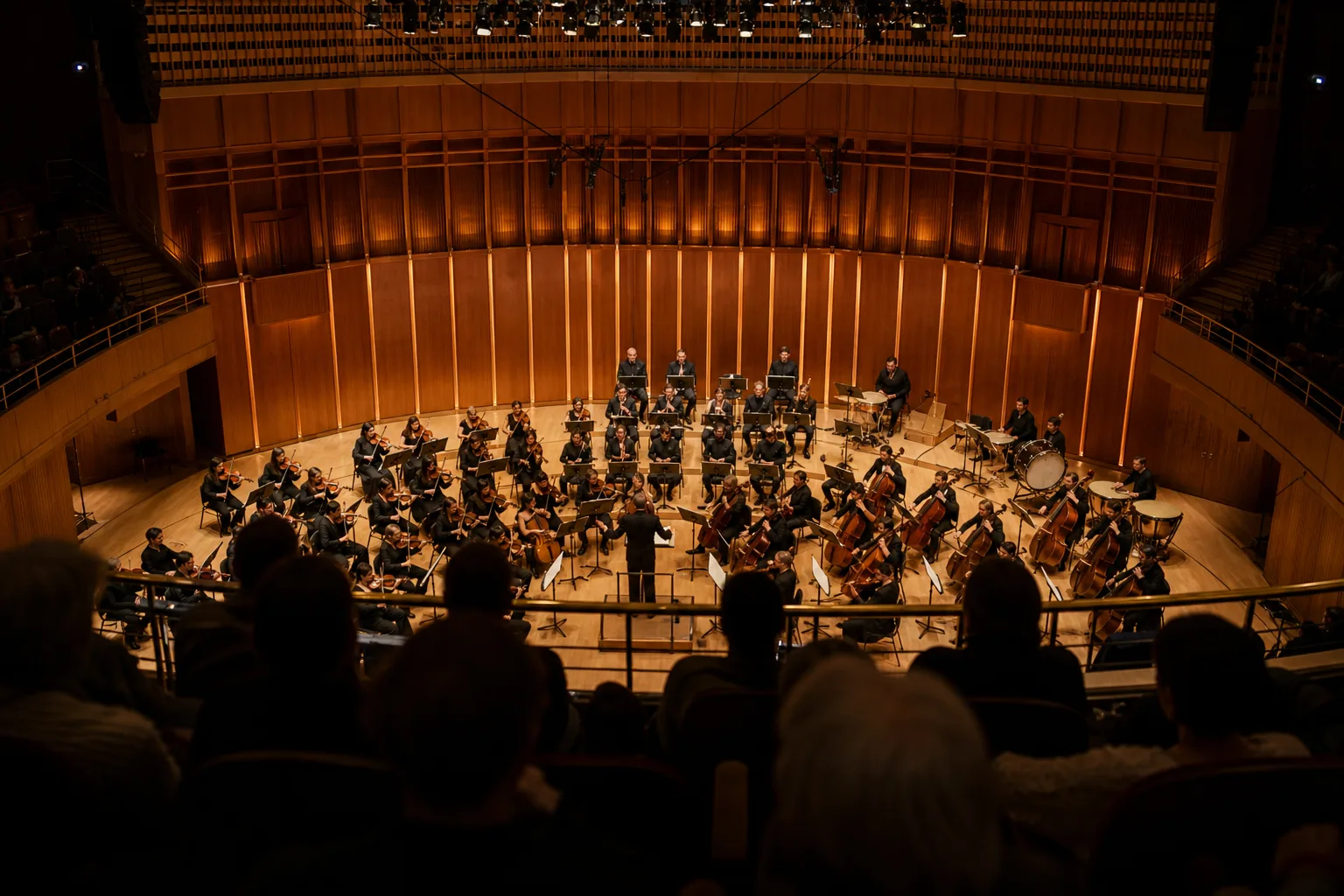
Going to a classical concert for the first time can be intimidating. It shouldn't be. A symphony is a long story told without words, and its map is fairly simple.
The four movements
Since the late 18th century, most symphonies have been divided into four parts. The first is usually fast and dramatic. The second, slow and songlike. The third is a dance: a minuet or a scherzo. The fourth, fast again, aims for a brilliant ending.
Following the themes
The first movement presents two contrasting melodies, transforms them and brings them back at the end. If you recognize a melody when it returns, you are already hearing the form.
You don't need to understand a symphony. It is enough to notice when something comes back and when something changes.
Applause
Today's custom is to clap only at the end of the piece, not between movements. If in doubt, wait until the conductor lowers their arms and turns around.
Three to start with
Beethoven's Fifth (1808): four notes that build everything. Mozart's Symphony No. 40 (1788): melancholy with elegance. Dvořák's Ninth, "From the New World" (1893): melodies that sound like film music, long before film.
In the hall
A symphony concert has fewer rules than it seems. You do not need formal dress or to read music. It helps to arrive early and read the program notes, which usually explain the work in a couple of pages. And if you can, listen to the symphony at home a few days before: recognizing a melody when it appears is one of the great pleasures of live music.