Oaxaca is best understood by eating
Smoky markets, moles in many colors, unhurried mezcal, and stone waterfalls just over an hour from the city. A full guide to eating, drinking and getting around Mexico's most delicious city, in four days.
Culturera may earn a commission if you buy through the links on this page. As an Amazon Associate I earn from qualifying purchases. The selection is ours alone.
Go to Oaxaca hungry and stay four days. Start at the 20 de Noviembre market, where meat is grilled in front of you in an aisle full of smoke; work through the seven moles at the rate of one a day; drink mezcal slowly, in sips; and take two trips out of town, one to the Zapotec city of Monte Albán and one to the stone waterfalls of Hierve el Agua. Nothing on that list is expensive, and almost all of it is within walking distance of the main square.
Some cities you visit with a map, others with an appetite. Oaxaca de Juárez, in southern Mexico, belongs to the second group. Its historic center, built in green stone on a straight grid, is a World Heritage site together with the Zapotec ruins of Monte Albán, but the first thing you remember afterwards is usually a dish.
There is a reason for that. The state of Oaxaca is the most diverse in Mexico: sixteen Indigenous peoples, each with its language, in a territory of mountains that kept the valleys apart for centuries. Every valley developed its own corn, its own chiles, its own way of doing things, and all of them meet in the markets of the capital. When UNESCO added traditional Mexican cooking to its list of intangible heritage in 2010, this was the kind of cooking it had in mind.
Where a guide, a class or transport helps, we link tours on GetYourGuide. We have not taken these tours: they are chosen for what they cover, and the city can be eaten perfectly well on your own.
How do you plan four days?
Day 1: the center. The two markets in the morning, the main square and the pedestrian street at midday, Santo Domingo and its museum in the afternoon, a first mezcal at night.
Day 2: Monte Albán. The ruins early, before the heat; back for a late lunch of mole; chocolate and the neighborhood of Jalatlaco in the evening.
Day 3: the eastern valley. The Tule tree, the weavers of Teotitlán, Mitla, a mezcal distillery and Hierve el Agua. A long day; on Sunday, add the market at Tlacolula.
Day 4: your choice. A cooking class that begins in the market, or the craft villages to the south, and a last tlayuda in the street after dark.
With two days, do the first two. With a week, add the coast, which a new highway has brought within three hours.
Market first
The 20 de Noviembre market is the best place to start. In its famous pasillo de humo, the smoke aisle, you choose your meat (tasajo, cecina, chorizo) and it is grilled on the spot, served with tortillas, spring onions, and chiles. Around it are stalls selling chocolate, egg-yolk bread, and tlayudas, the large crisp tortillas that make a full dinner.
How the smoke aisle works, because nobody explains it. You walk in from the street and women at the first stalls hand you a basket: choose spring onions and long green chiles, which will be grilled with your meat. Further in, the butchers display their cuts. Tasajo is thinly sliced beef, lightly salted; cecina enchilada is pork rubbed with red chile; chorizo comes in strings of small round links. You point, they weigh, and everything goes onto the coals. Then someone finds you a place at one of the long shared tables and brings tortillas, guacamole, salsas and radishes, each charged separately and none expensive. Your clothes will smell of smoke until evening. It is worth it.
Next door, under the same kind of roof, is the Benito Juárez market, older and more varied: cheese, chiles, mole pastes, leather sandals, baskets, flowers, and the stalls of the women who sell chapulines, grasshoppers toasted with garlic, lime and chile, by the scoop. Try them. They taste of lime and salt, and crunch.
Two more markets, for the curious. The Central de Abastos, a fifteen-minute walk to the west, is the enormous wholesale market where the whole valley shops, at its largest on Saturdays; it is chaotic, cheap and the place where many cooks say the best memelas in the city are made. Keep your phone in a front pocket. And on Fridays and Saturdays the small organic market of El Pochote gathers producers from the villages, with tables in a courtyard for breakfast.
Mezcal is kissed, not gulped: you drink it slowly and, if you can, while talking to the person who made it.
The seven moles
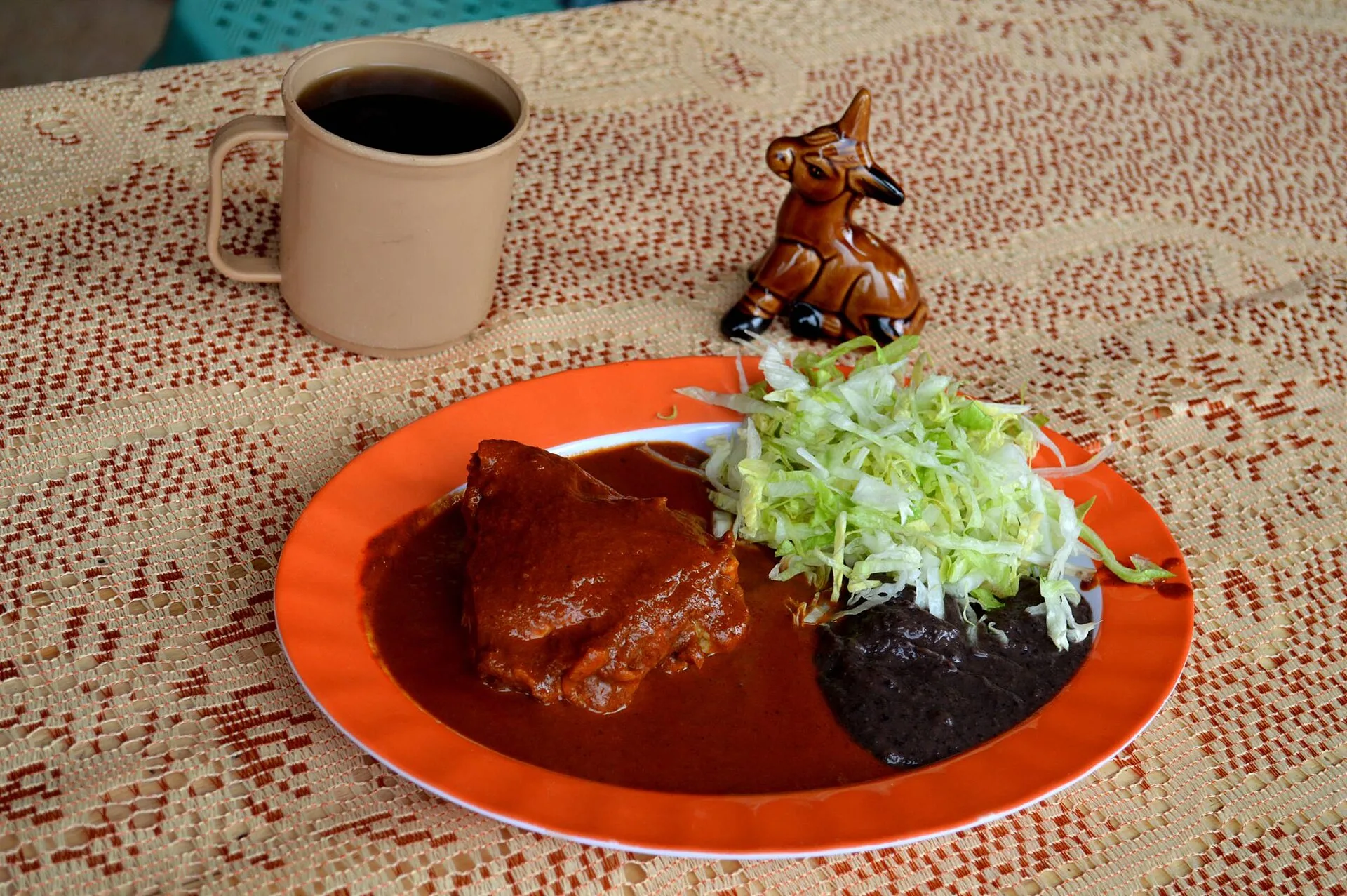
Oaxaca is known as the land of seven moles: negro, coloradito, amarillo, verde, rojo, chichilo, and manchamanteles. Trying them all is a good plan for an entire trip.
Each combines different chilies, spices, seeds and sometimes chocolate, and some call for more than thirty ingredients and days of preparation. The negro is the most complex and the one for celebrations. If you want to take one home, markets sell it as a paste, ready to thin with stock.
A mole is a sauce, not a dish: it is served over chicken, turkey or pork, or inside a tamal, and it is the sauce that matters. Here is what to expect from each.
Negro. Black, glossy, slightly sweet and bitter at once. Its color comes from chiles toasted almost to charcoal, above all the rare chilhuacle negro, and from chocolate. It is the mole of weddings and of the Day of the Dead.
Rojo. Brick red, with more heat and less sweetness, thickened with nuts and sesame.
Coloradito. "Little red": milder and a touch sweeter, the friendliest for a first encounter. It is also the usual filling of enmoladas.
Amarillo. Not really yellow but orange, thin, without chocolate, scented with a herb called hierba santa. You will meet it in the half-moon turnovers called empanadas de amarillo, cooked on a clay griddle.
Verde. Green and fresh, made of pumpkin seeds, green tomatoes and herbs, served with pork and white beans.
Chichilo. The rarest and the most austere: dark, smoky, made with beef stock and the ash of burnt tortillas and chile seeds. Traditionally it is served at funerals. If you see it on a menu, order it.
Manchamanteles. "Tablecloth-stainer": red, fruity, with pineapple and plantain in the sauce.
What else should you eat?
Corn, in every shape. Oaxaca is one of the places where corn was first domesticated, thousands of years ago, and it is still the base of almost everything.
Tlayudas. A tortilla the size of a pizza, dried until leathery and crisp, spread with asiento, the tasty sediment of pork lard, and with black bean paste, then covered with string cheese, cabbage and a piece of grilled meat. At night it is folded in half and toasted directly on the coals at street stands. This is the city's late dinner.
Memelas. Thick little tortillas with pinched edges, smeared with asiento, beans and crumbled cheese: the classic market breakfast. Tetelas are their triangular cousins, stuffed with beans.
Tamales oaxaqueños. Steamed in banana leaf instead of corn husk, which leaves them moist and flat, and filled with mole negro and shredded chicken.
Quesillo. The local string cheese, sold wound into balls like yarn. It melts into everything.
Tejate. A pre-Hispanic drink of corn, cacao and the seed of the mamey fruit, served cold from huge clay bowls with a pale foam on top. It looks like wet cement and tastes like a light, nutty chocolate milk. The market women of the nearby town of San Andrés Huayápam are its guardians.
Chocolate. Here it is something to drink. On calle Mina, south of the markets, the chocolate mills grind cacao with sugar, cinnamon and almonds to each customer's recipe, and the whole street smells of it. Order it with water or with milk, whisked to a froth, and dip in it a piece of pan de yema, the soft egg-yolk bread.
Nieves. Water ices, hand-churned in wooden tubs, sold at the square in front of the basilica of La Soledad. The classic combination is leche quemada, a smoky burnt-milk flavor, with tuna, the bright red prickly-pear fruit.
If you would rather be led through all of this by someone who knows the stalls, an evening walk such as this street food tour with more than fourteen tastings covers a good part of the list in a few hours. Go on your first night, and you will know what to order for the rest of the trip.
How do you drink mezcal?
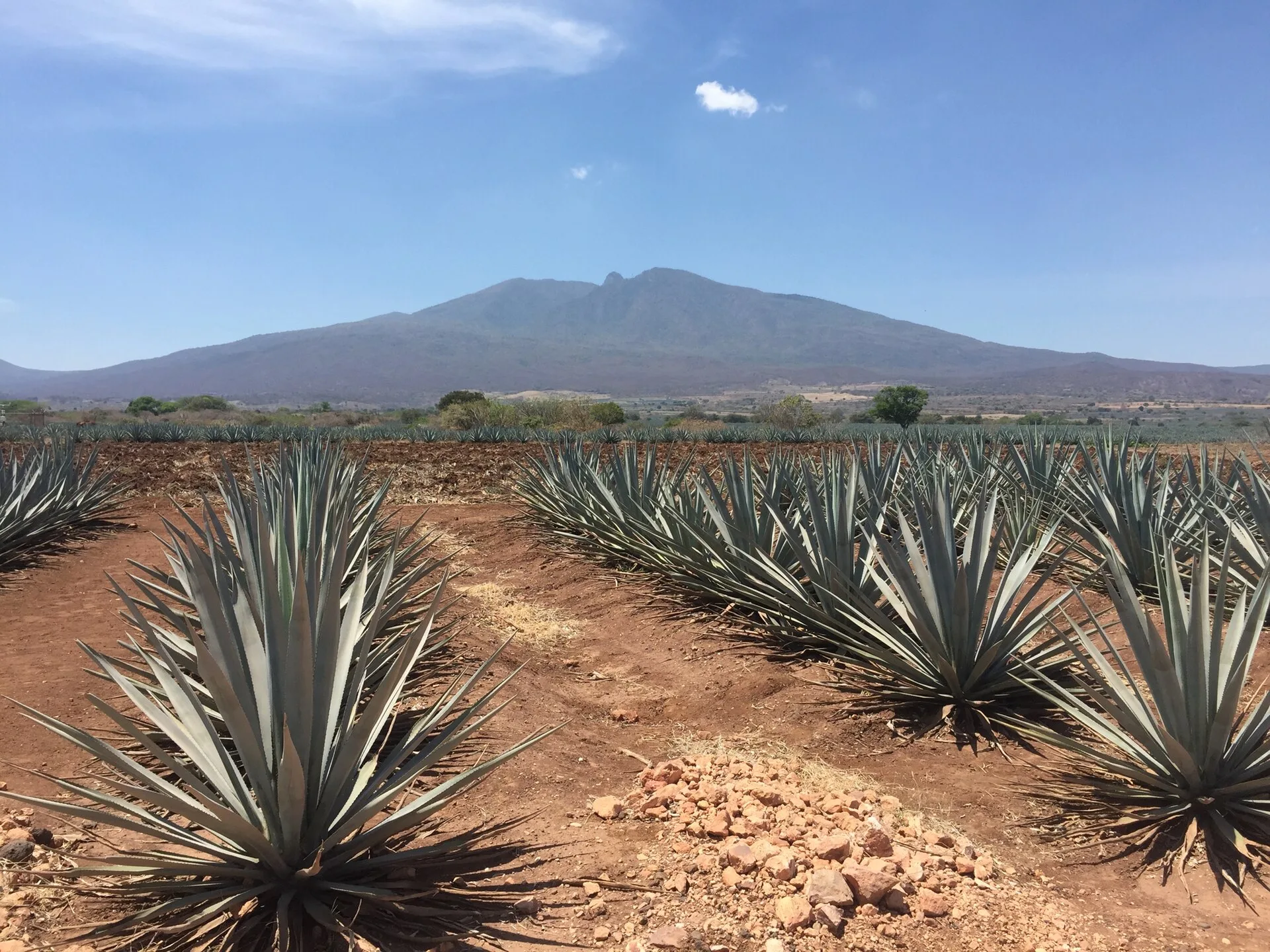
Slowly. Mezcal is distilled from the heart of the agave, a plant that takes between seven and thirty years to mature, depending on the species, and is harvested once. The hearts are roasted for days in a pit lined with hot stones, which is where the smoke comes from; then they are crushed, often by a stone wheel pulled by a horse, fermented in open wooden vats and distilled twice in small copper or clay stills. Tequila is, technically, a kind of mezcal, made industrially from a single species; what you drink in Oaxaca is its handmade ancestor.
Order it neat, in a small wide glass or a hollowed gourd, never on ice. It comes with slices of orange and sal de gusano, salt ground with chile and a toasted agave worm. Take a small sip, hold it, breathe out. The label will tell you the agave: espadín is the cultivated one, the base of most mezcal and the place to begin; tobalá, tepeztate and madrecuixe are wild species, rarer and more expensive, each with a different character. Good mezcal is clear. The worm in the bottle is a marketing invention for export.
The city has dozens of mezcal bars, and many offer tastings of three or four small pours with an explanation. A sit-down session such as this mezcal tasting with its history and culture is a good first lesson. Better still is to see it made: the road east of the city, toward Mitla, passes through Santiago Matatlán, which calls itself the world capital of mezcal, and the family distilleries along it, called palenques, receive visitors. Most day trips to Hierve el Agua stop at one. The local saying sums up the philosophy: for everything bad, mezcal; for everything good, too.
What is there to see in the center?
A city of low houses in a pale green stone called cantera, laid out in 1529 on a grid so regular that you cannot get lost. Everything lies between two squares, ten minutes apart.
The Zócalo, the main square, is shaded by huge laurel trees and ringed with cafés under arcades. It is the city's living room: marimba bands, balloon sellers, shoe-shiners, and sometimes a protest camp, because Oaxaca is also a city of strong unions and long memories. The cathedral stands on its north side.
From there the Andador Macedonio Alcalá, a pedestrian street lined with galleries and courtyards, climbs gently north to Santo Domingo.
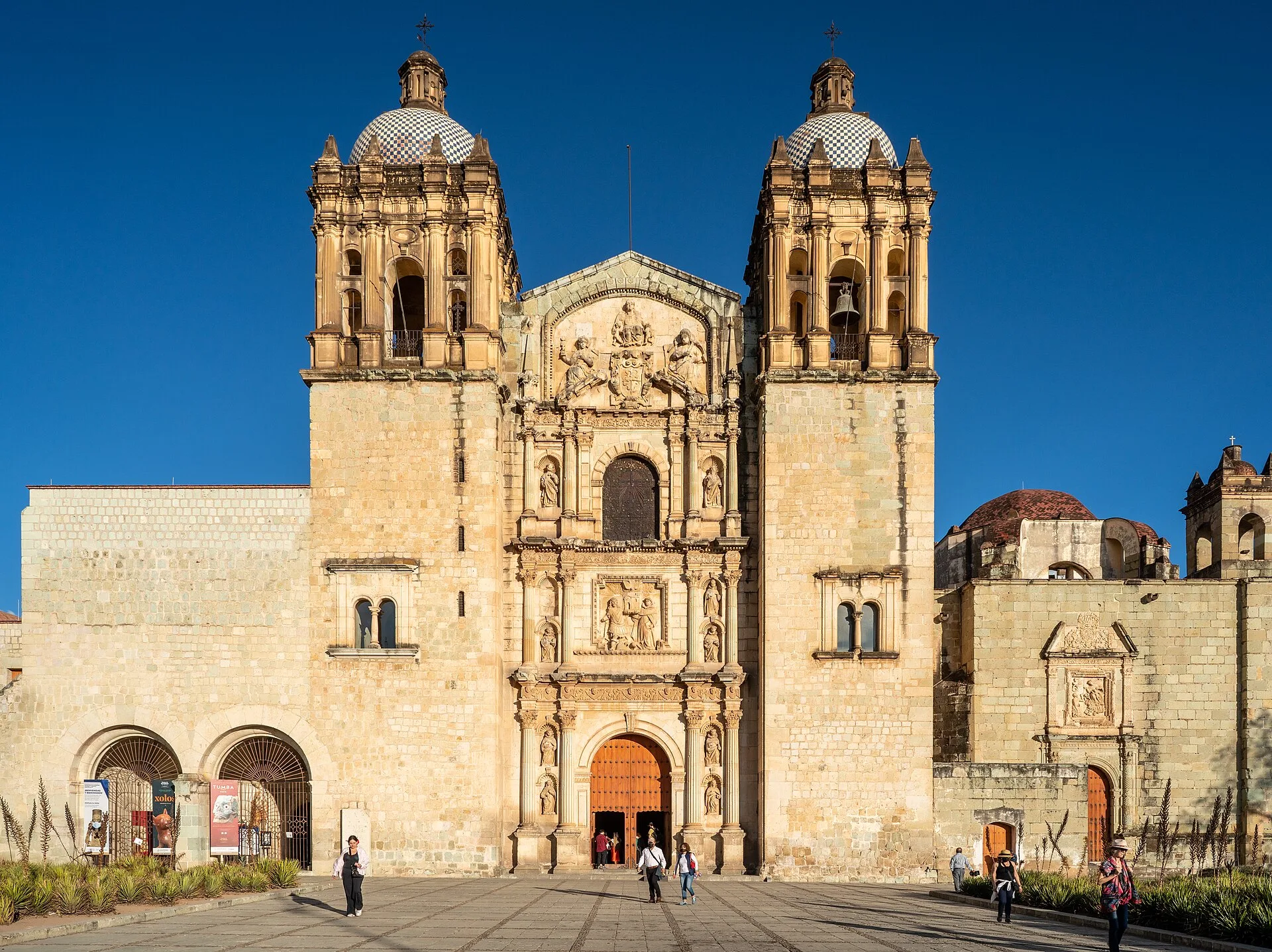
The former convent beside the church of Santo Domingo de Guzmán houses the Museum of Oaxacan Cultures and an ethnobotanical garden. Save it for the afternoon, when the stone of the facade changes color.
Go into the church first. The plain exterior hides one of the most exuberant Baroque interiors in Mexico: every surface of the vault is covered in gilded and painted plaster, and above the entrance the family tree of the founder of the Dominican order spreads across the ceiling as a vine with busts for fruit. The museum, in the convent's cloisters, tells the history of the state from the first farmers to the present, and one room justifies the ticket on its own: the treasure of Tomb 7 of Monte Albán, found intact in 1932, with its Mixtec gold, turquoise mosaics, carved jaguar bones and a skull covered in turquoise. The museum opens from Tuesday to Saturday, from 10:00 to 16:00, and in 2026 costs 210 pesos for foreign visitors and 105 for Mexicans.
The ethnobotanical garden, behind the convent, gathers plants from every region of the state, including a wall of organ cactus that appears in a thousand photographs. It can be visited only on guided walks at fixed times, in Spanish and several days a week in English; ask at the gate the day before.
Two neighborhoods complete the walk. Jalatlaco, ten minutes east of Santo Domingo, is a former village of tanners with cobbled streets and houses painted with murals, now full of cafés. Xochimilco, to the north, keeps the stone arches of the colonial aqueduct, with front doors built into them.
Monte Albán: is it worth the trip?
Yes, and it is the easiest excursion: nine kilometers from the center, half an hour by road. Around 500 BC the Zapotecs chose a mountain 400 meters above the valley floor, cut off its top and built a city on the platform they had made. For more than a thousand years it was the capital of the region, with perhaps 20,000 people at its height, and then it was abandoned, centuries before the Spanish arrived.
What you see is the Great Plaza, a vast rectangle of pyramids and platforms open to the sky, with the three valleys of Oaxaca falling away on every side. Climb the South Platform first, for the whole view. Look for the ball court, the arrow-shaped Building J, set at an odd angle to everything else and thought to be an observatory, and the Danzantes: stone slabs carved with contorted human figures that were long taken for dancers and are now thought to be captives, sacrificed and mutilated. The small site museum keeps the originals.
The site opens every day from 8:00 to 17:00, with last entry at 16:00, and costs 210 pesos for foreign visitors in 2026. Go when it opens: there is almost no shade, and by eleven the tour buses have arrived. Tourist shuttles leave from the hotels on calle Mina, near the markets, every half hour or so, and return at fixed times; a taxi is quick and not expensive between several people. With a guide the stones say much more, and a half-day visit such as this guided archaeological tour of Monte Albán includes the transport.
Out of town
About 70 kilometers to the east is Hierve el Agua, a set of mineral formations that look like frozen waterfalls, with natural pools at the edge of a cliff. On the way there are small distilleries where mezcal is made by hand, and villages of weavers.
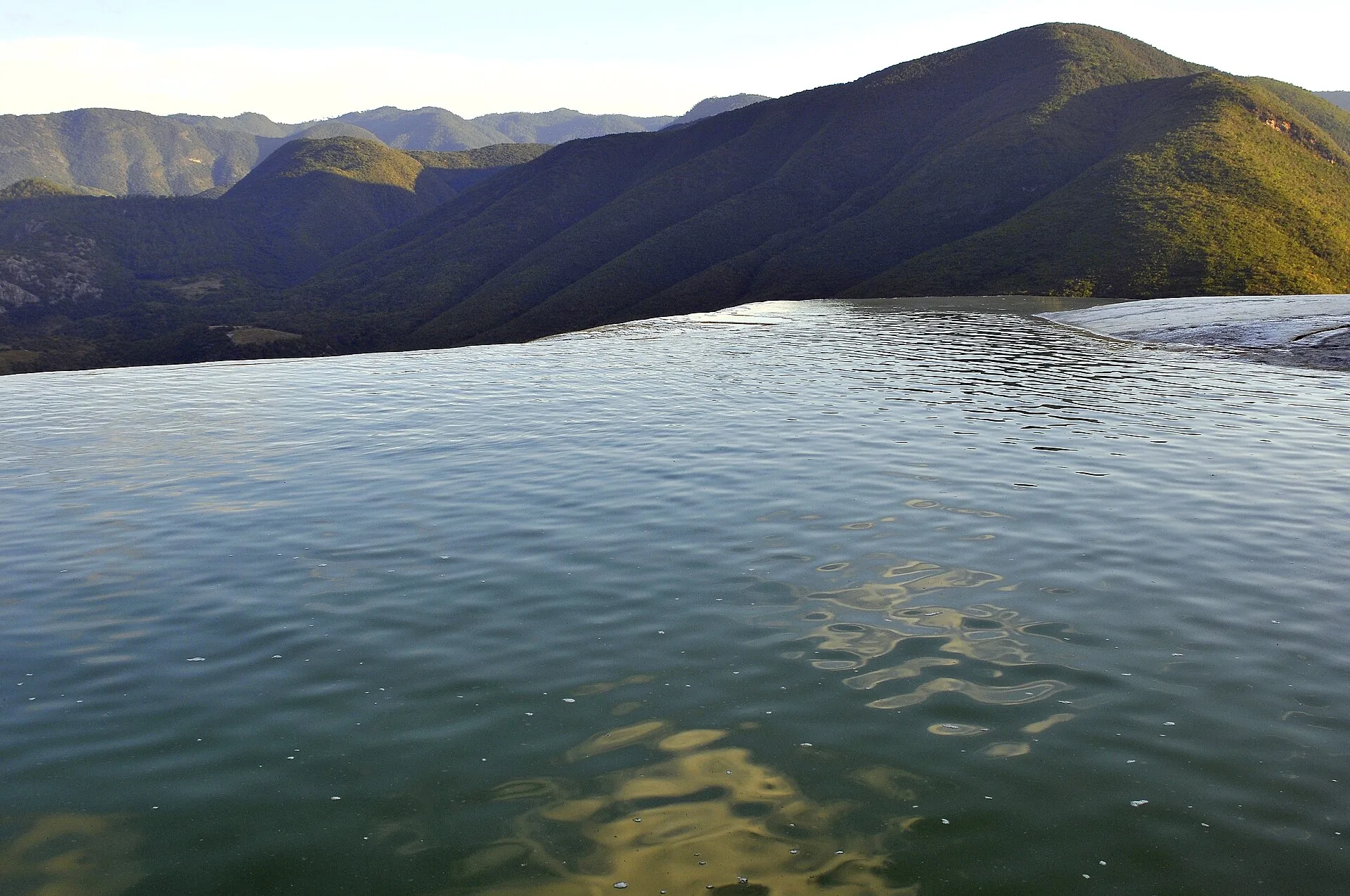
The name means "the water boils", though the water is not hot: springs loaded with minerals bubble out at the top of a cliff and, over thousands of years, have left white curtains of stone hanging down the rock face. You can swim in the pools at the edge, with the valley below, and walk a steep path of about an hour around the foot of the falls for the full view. The site is run by the neighboring communities, who charge small fees in cash, roughly 70 to 110 pesos in all in 2026. Disputes between them have closed it for months at a time in the past, so check that it is open before you set out. Go early or on a weekday; by midday on weekends the pools are full.
The road there is a string of stops, and this is the classic day out from Oaxaca.
El Tule. In the churchyard of a small town stands a Montezuma cypress with the stoutest trunk of any tree in the world, about fourteen meters across, and an age estimated at well over a thousand years. Ten minutes are enough, and they are a good ten minutes.
Teotitlán del Valle. A Zapotec town of weavers. In the family workshops they show how wool is carded, spun and dyed with what the valley gives: indigo for blue, marigold for yellow, and for red the cochineal, a tiny insect that lives on prickly-pear cactus and was once, after silver, the most valuable export of colonial Mexico.
Mitla. The second great archaeological site of the valley, very different from Monte Albán: small, low and decorated. Its palaces are covered in geometric mosaics made of thousands of small cut stones, fitted without mortar, in patterns that repeat like weaving. It opens daily from 8:00 to 17:00 and costs 210 pesos for foreign visitors in 2026.
Tlacolula. On Sundays, this town holds one of the oldest and largest markets in Mesoamerica. People come down from the mountain villages in traditional dress to buy and sell, and there is a smoke aisle that rivals the one in the city.
You can do the route by rental car, by a combination of bus and shared pickup trucks, or with a driver. Organized day trips do all of it in about ten hours; you can check dates for one here.
Which craft villages are worth visiting?
South of the city, three towns can be combined in a morning or added to Monte Albán. San Bartolo Coyotepec makes barro negro, black pottery with a metallic sheen obtained by polishing the clay with a quartz stone before firing. San Martín Tilcajete carves and paints alebrijes, fantastical animals in copal wood covered with patterns of dots; whole families work on a single piece for weeks. And on Fridays the market of Ocotlán fills the town. Buy in the workshops: the price is fair, and the money stays with those who did the work.
Is a cooking class worth it?
More here than almost anywhere. The classes follow the same pattern: you meet the cook at a market, buy chiles, herbs and corn dough with her, and go back to her kitchen to make a mole, a soup, a salsa ground in a stone mortar and tortillas pressed by hand. You eat what you have cooked, usually with a mezcal. It takes about five hours, and you come away understanding the menus of the rest of your trip. One example is this traditional Oaxacan cooking class with a market visit.
What about money, tipping and vegetarians?
Oaxaca is one of the cheaper cities in Mexico for a visitor, and its best meals are its cheapest ones. Markets, street stands, shared taxis and the community fees at sites such as Hierve el Agua are cash only, in pesos, and small notes are appreciated; there are bank machines around the Zócalo, and it is wiser to use those inside a bank. Restaurants and hotels take cards. In restaurants a tip of ten to fifteen percent is expected; at market stalls it is not, though rounding up is kind.
Vegetarians eat better here than in most of Mexico, with one warning: asiento, the pork lard spread on tlayudas and memelas, is invisible. Ask for your order sin asiento and with beans only. Squash blossoms, wild mushrooms in the rainy season, the corn fungus called huitlacoche, cheese and the wild greens called quelites fill empanadas and quesadillas at every griddle, and the mole verde and the amarillo are often served over vegetables.
One more custom worth knowing: the main meal of the day is the comida, eaten between about 14:00 and 16:00, and many traditional kitchens serve a fixed menu at that hour and then close. Dinner is light, and for most people in the city it is a tlayuda.
When to go
The city sits at about 1,550 meters, so the climate is mild all year: warm days, cool nights. The dry season, from October to April, has blue skies every day. The rains come from June to September, usually as an afternoon downpour that leaves the valley bright green.
Three dates fill the city, and for all three you should book months ahead.
The Day of the Dead, from October 31 to November 2. Families build altars with marigolds, bread and the favorite dishes of their dead, the cemeteries are lit with candles all night, and costumed parades called comparsas cross the neighborhoods. It is the most intense week of the year.
The Guelaguetza, on the two Mondays after July 16. Delegations from the eight regions of the state dance in an open-air amphitheater on the hill above the city, in the dress of their villages, and throw gifts to the public. In 2027 the two Mondays are expected to be July 19 and 26.
The Night of the Radishes, on December 23. Since the 19th century, market gardeners have competed on the main square with nativity scenes and whole landscapes carved out of giant radishes. The line to see them takes hours, and it is exactly as odd as it sounds.
How do you get there, and how do you get around?
Oaxaca has an airport, twenty minutes from the center, with frequent flights from Mexico City, about an hour away, and a few direct ones from the United States. First-class buses from Mexico City take six to seven hours on a good highway.
The center is walked. For the villages there are three options: taxis hired by the hour or the day, at a price agreed beforehand; *colectivos*, shared taxis that run fixed routes to every town for a few pesos and leave when full; and second-class buses. A rental car is useful for the eastern valley and unnecessary in town.
For the Pacific coast, a highway opened in 2024 has cut the drive to Puerto Escondido, with its surf beaches, from more than six hours of mountain curves to about two and a half.
Where should you stay?
The center, between the Zócalo and Santo Domingo, puts everything within ten minutes on foot; rooms facing a courtyard are quieter than those on the street. Jalatlaco is prettier and calmer, a short walk away. Reforma, to the north, is where Oaxacans with money live, with good restaurants and no sights. Prices rise sharply for the Day of the Dead and the Guelaguetza.
What mistakes should you avoid?
Eating only in restaurants. The best food in Oaxaca costs little and is served at a market stall or on a street corner at night.
Gulping the mezcal. It is 45 percent alcohol or more, and the altitude helps it along. Sip, and drink water.
Taking pictures without asking. In the markets and villages many people, especially the older women, do not want to be photographed. Ask first, and buy something.
Leaving Monte Albán for midday. There is no shade. Be there at 8:00.
Not checking Hierve el Agua. It closes from time to time. Ask at your hotel the day before.
Being careless with water. Drink bottled or purified water, and at street stalls choose the busy ones, where the food does not sit.
Getting angry at a roadblock. Protests that block roads are part of political life here, particularly in May and June. They are peaceful, and they pass. Leave slack in your plans on the day you fly out.
Quick answers
How many days do you need in Oaxaca? Four: two for the city and its markets, one for Monte Albán and one for the eastern valley and Hierve el Agua.
What are the seven moles? Negro, rojo, coloradito, amarillo, verde, chichilo and manchamanteles.
What is the smoke aisle? The corridor of the 20 de Noviembre market where you choose raw meat and it is grilled for you on charcoal.
How much is Monte Albán in 2026? 210 pesos for foreign visitors and 105 for Mexicans. It opens daily from 8:00 to 17:00.
Is Hierve el Agua open? Usually, for roughly 70 to 110 pesos in community fees, but it has closed for months at a time in the past, so confirm before you go.
What is the difference between mezcal and tequila? Tequila is made from one species of agave, mostly by industrial methods. Mezcal can be made from dozens and, in Oaxaca, is still roasted in pits and distilled by hand.
When is the Guelaguetza? On the two Mondays after July 16; in 2027, July 19 and 26.
Is Oaxaca safe? The city and the valleys in this guide are calm and used to visitors. Use the normal care of any city at night.
Prices and opening hours in this guide were checked in November 2026 on the pages of Mexico's National Institute of Anthropology and History and in local sources. Confirm them before you go.