Peruvian ceviche: five ingredients and no cooking
Fish, lime, chili, onion and salt. The classic recipe, the reason for leche de tigre and the mistakes to avoid.
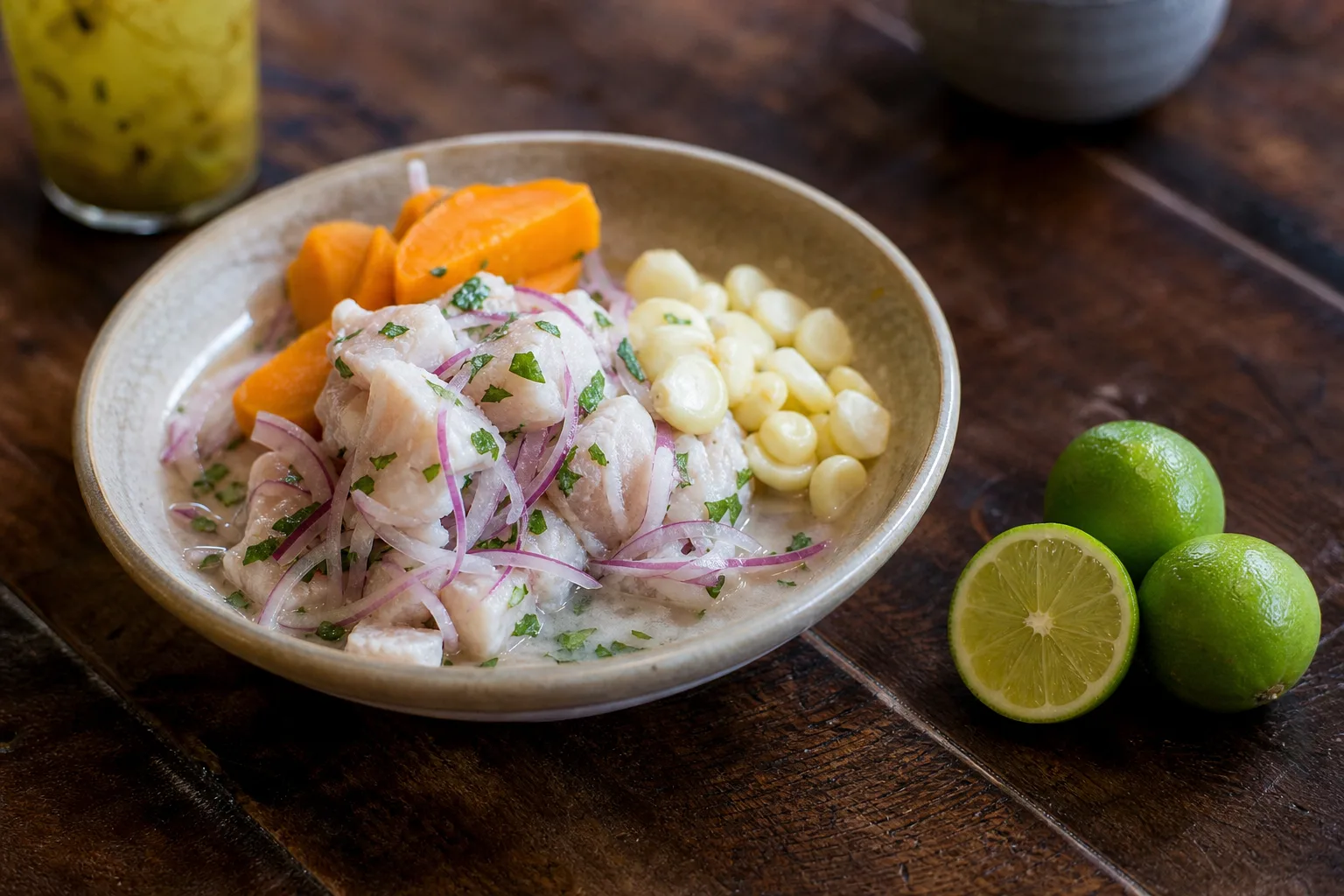
Ceviche is Peru's flagship dish. In 2023, UNESCO added the practices and meanings associated with its preparation and consumption to its intangible heritage list. Making it at home is easy if you respect one rule: the fish must be extremely fresh.
The five ingredients
Firm white fish: sea bass, sole, grouper. Lime — small and sharp, what Peruvians call limón. Ají limo, or a fresh chili that is not too sweet. Red onion in very fine slivers. Salt.
The method
Cut the fish into cubes of about two centimeters. Salt it and mix with the chopped chili. Squeeze the limes at the last moment, without pressing to the very end so they don't turn bitter, and pour the juice over. Stir, add the onion and serve. In today's Lima style, the fish spends only a few minutes in the lime.
Lime does not cook the fish: it changes its proteins. That is why freshness is not negotiable.
Leche de tigre
"Tiger's milk" is the juice left behind: lime, salt, chili and the juices of the fish. It is drunk from a small glass and is said to revive anyone.
The sides
Boiled sweet potato, which adds sweetness; choclo, large-kernel corn; and cancha, toasted crunchy corn.
Common mistakes
Marinating for hours: the fish turns rubbery. Using bottled lime juice. Cutting the fish too small.
Safety
Buy the fish from someone you trust and say it is to be eaten raw; freezing it beforehand reduces the risk of parasites.
Other versions
Ceviche has relatives all along the Pacific coast. In Ecuador it is often made with shrimp and served with more juice, almost like a cold soup, alongside fried plantain or toasted corn. In Mexico it comes with chopped tomato, onion and cilantro, eaten on crisp tostadas. And Peru also gave us tiradito, sliced thin like sashimi, a legacy of Japanese immigration.