The huipil: a garment you can read
Woven on the backstrap loom since before the Conquest, each huipil says where its wearer comes from. And it raises a question about who may copy it.
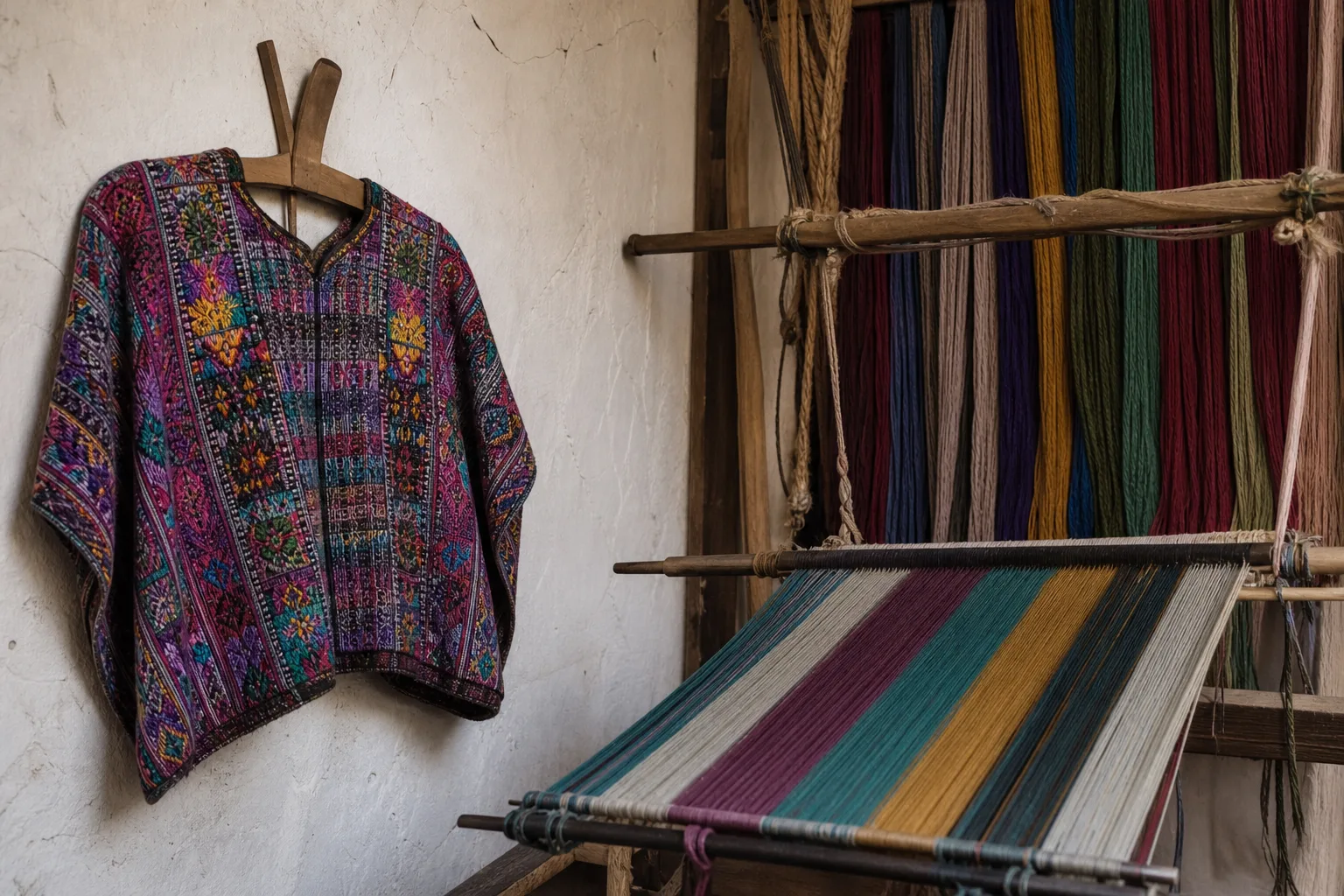
The huipil is a sleeveless tunic made of one, two or three joined rectangular panels, with an opening for the head. Indigenous women in Mexico and Guatemala have worn it for more than two thousand years.
The loom
It is traditionally woven on a backstrap loom: one end is tied to a tree or post and the other to the weaver's back, so that she tensions the threads with her own body. A festive huipil can take months of work.
A language
The colors, figures and shape of the embroidery indicate the community of origin, and sometimes marital status or the occasion. Diamonds can stand for the universe; zigzags, for the serpent or lightning; flowers and birds, for the surroundings. Among Triqui women in Oaxaca, the red huipil is associated with a butterfly emerging from its cocoon.
Someone who knows how to look at a huipil can tell what town it comes from. It is a woven identity document.
From Frida to the runway
Frida Kahlo made the huipil of the Isthmus of Tehuantepec famous. In recent decades, several international brands have reproduced community designs without permission or payment, prompting protests from the Mexican government and a 2022 law protecting the cultural heritage of Indigenous peoples.
How to buy well
Directly from weavers or cooperatives. Ask what community it is from and how long it took to make. And be wary of low prices: handwork is not cheap.
Where to see them
To appreciate the variety of huipils, it is best to see them together. The Textile Museum of Oaxaca shows pieces from across the state and runs workshops with weavers. In San Cristóbal de las Casas, Chiapas, the Centro de Textiles del Mundo Maya gathers hundreds of garments from the highlands. And in Mexico City, the Museo de Arte Popular devotes rooms to textiles. Many have shops where what you pay reaches the person who made it.