The Panama hat is from Ecuador
It is handwoven in Manabí and Azuay from toquilla straw. Panama only gave it the name, and a US president the fame.
It is one of fashion's most durable misunderstandings. The Panama hat is not made in Panama and never has been: it is Ecuadorian.
The straw
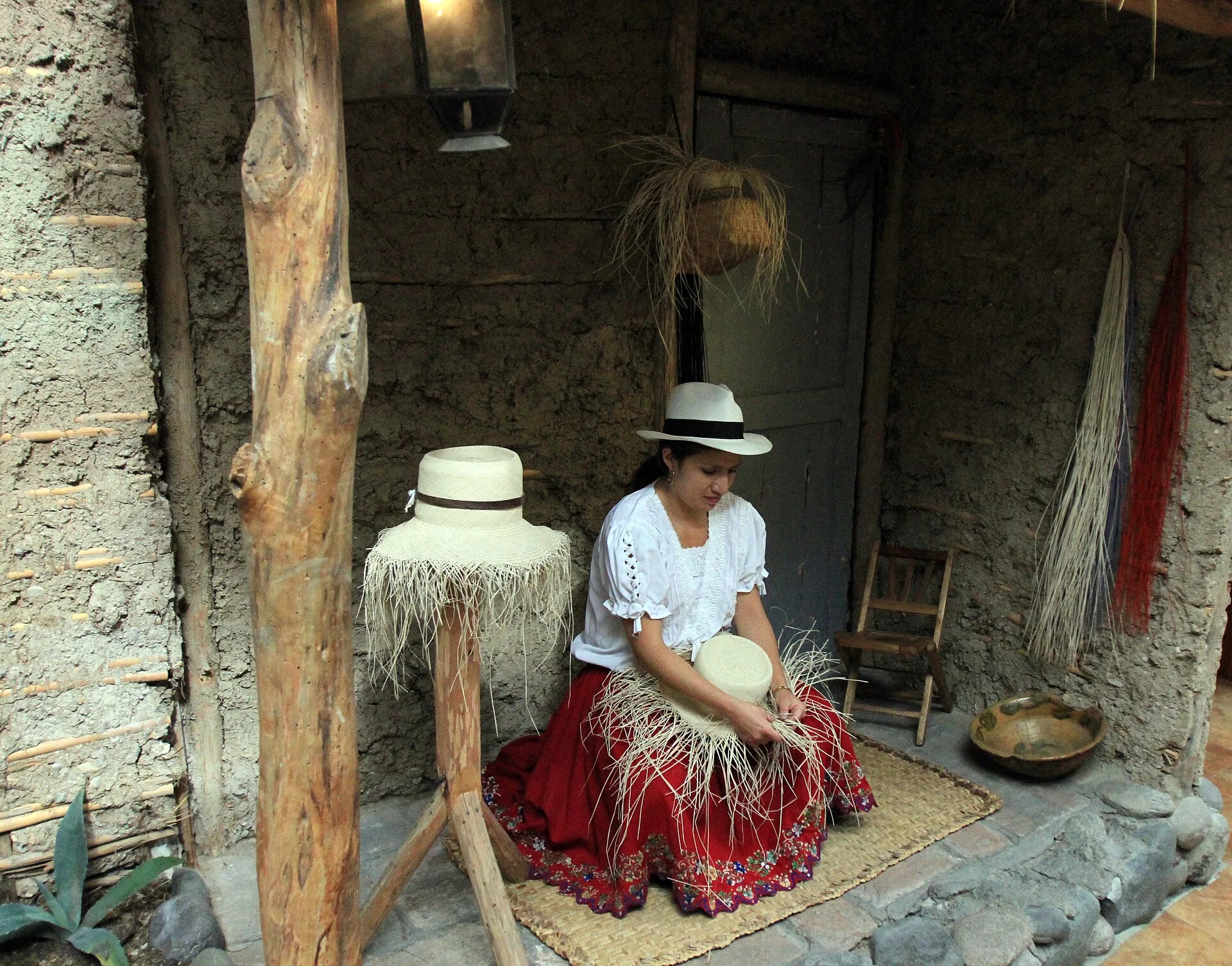
It is woven from the fibers of toquilla straw, a palm-like plant that grows on Ecuador's coast. The stalks are split, boiled, dried and divided into very fine strands.
The weaving
In the coastal province of Manabí, especially in Montecristi, and in Azuay and Cañar, around Cuenca, thousands of artisans weave each hat by hand. An ordinary one takes a few days. A Montecristi superfino, with thousands of weaves per square inch, can take several months, and is woven at dawn and dusk, when humidity makes the fiber pliable.
They say a good Montecristi can be rolled up, passed through a ring and spring back into shape. It is true, but better not tested often.
Why "Panama"
In the 19th century, the hats were exported through the Isthmus of Panama, where travelers bound for the California gold rush bought them. In 1906, President Theodore Roosevelt was photographed wearing one while visiting the canal works. The name was sealed.
The recognition
In 2012, UNESCO added the traditional weaving of the Ecuadorian toquilla straw hat to its list of intangible heritage of humanity.
How to choose one
Look inside the crown: the tighter and more regular the rings of the weave, the better. Hold it by the brim, not the crown.
Care
A good toquilla straw hat lasts many years. Always pick it up by the brim, not the crown: pinching the front eventually cracks the fiber. Do not leave it in the sun inside a car or store it damp. The finest can be rolled for travel, but only for a short time. And if it loses its shape, a little steam and your hands are enough to restore it.