What a film editor really does
Editing decides a film's rhythm, emotion and even its meaning. And you almost never notice it.
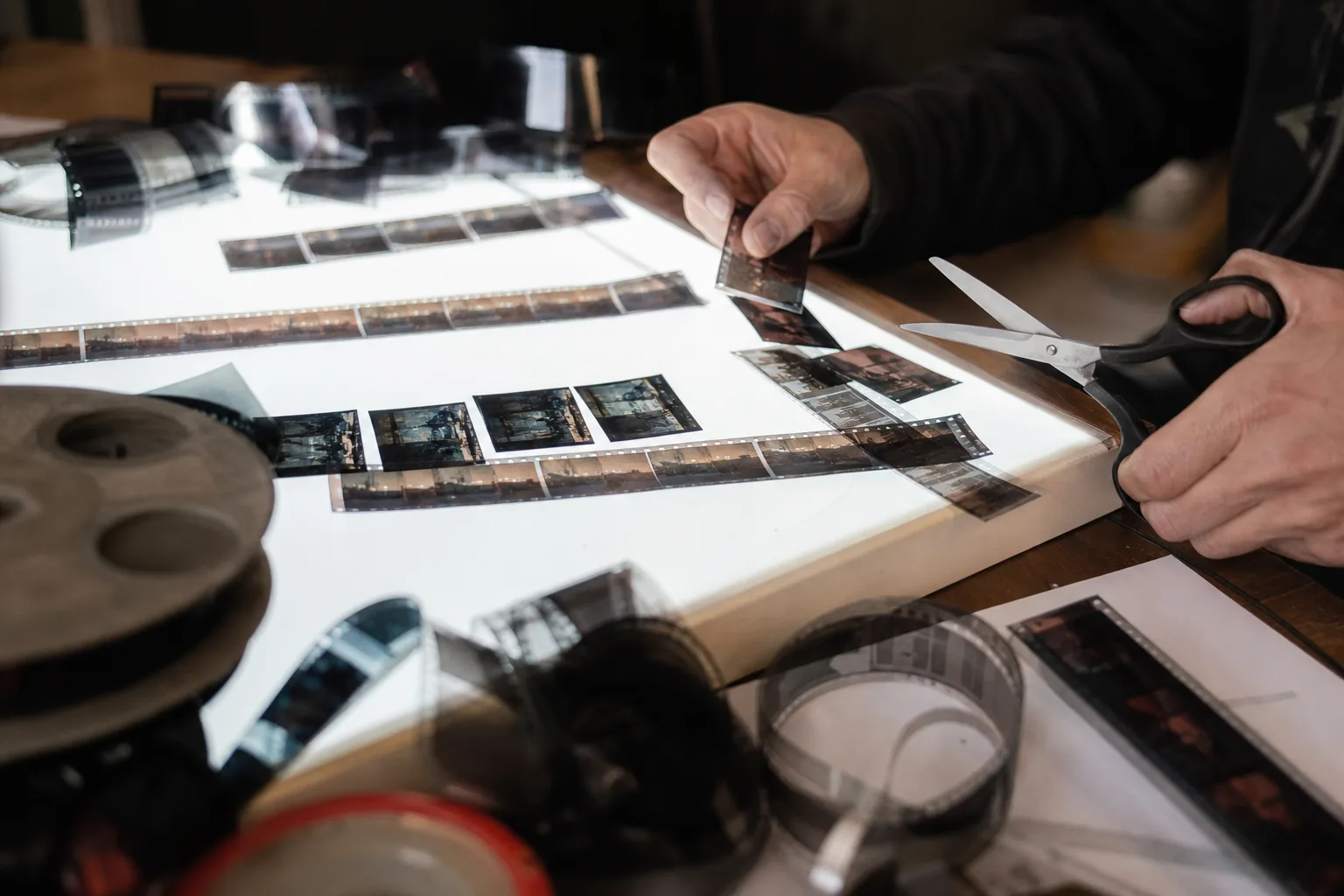
Of all the crafts in filmmaking, editing may be the most invisible. When it works, nobody thinks about it. Yet the cutting room is where a film is written for the last time.
Choosing and ordering
A shoot produces many more hours of footage than fit on screen. The editor chooses the takes, decides how long each shot lasts and in what order things are told. Changing that order can turn a comedy into a drama.
The Kuleshov experiment
Around 1920, Soviet filmmaker Lev Kuleshov intercut the same shot of an actor's neutral face with a bowl of soup, a coffin and a woman. Audiences are said to have seen hunger, grief and desire. The conclusion changed cinema: meaning comes from joining two images, not from each one alone.
A cut is a question the viewer answers without noticing.
Rhythm
Long takes invite you to observe; quick cuts raise the pulse. Walter Murch, editor of Apocalypse Now, argues that the best moment to cut often matches a blink: the instant a thought ends.
Next time a scene moves you, watch it again and count the cuts. That is where the trick is.
An exercise
The next time you watch a dialogue scene, notice when the cut comes. Often the shot changes before the character finishes the line, to show the listener's reaction: what matters is not who is talking but the effect of the words. The editor Walter Murch argues that the best moment to cut coincides with the viewer's natural blink. If you did not notice the cut, the editing has worked.