The trench coat: from the trenches to the wardrobe
Every strap and ring on this coat had a military job. That is why, a hundred years on, it still works.
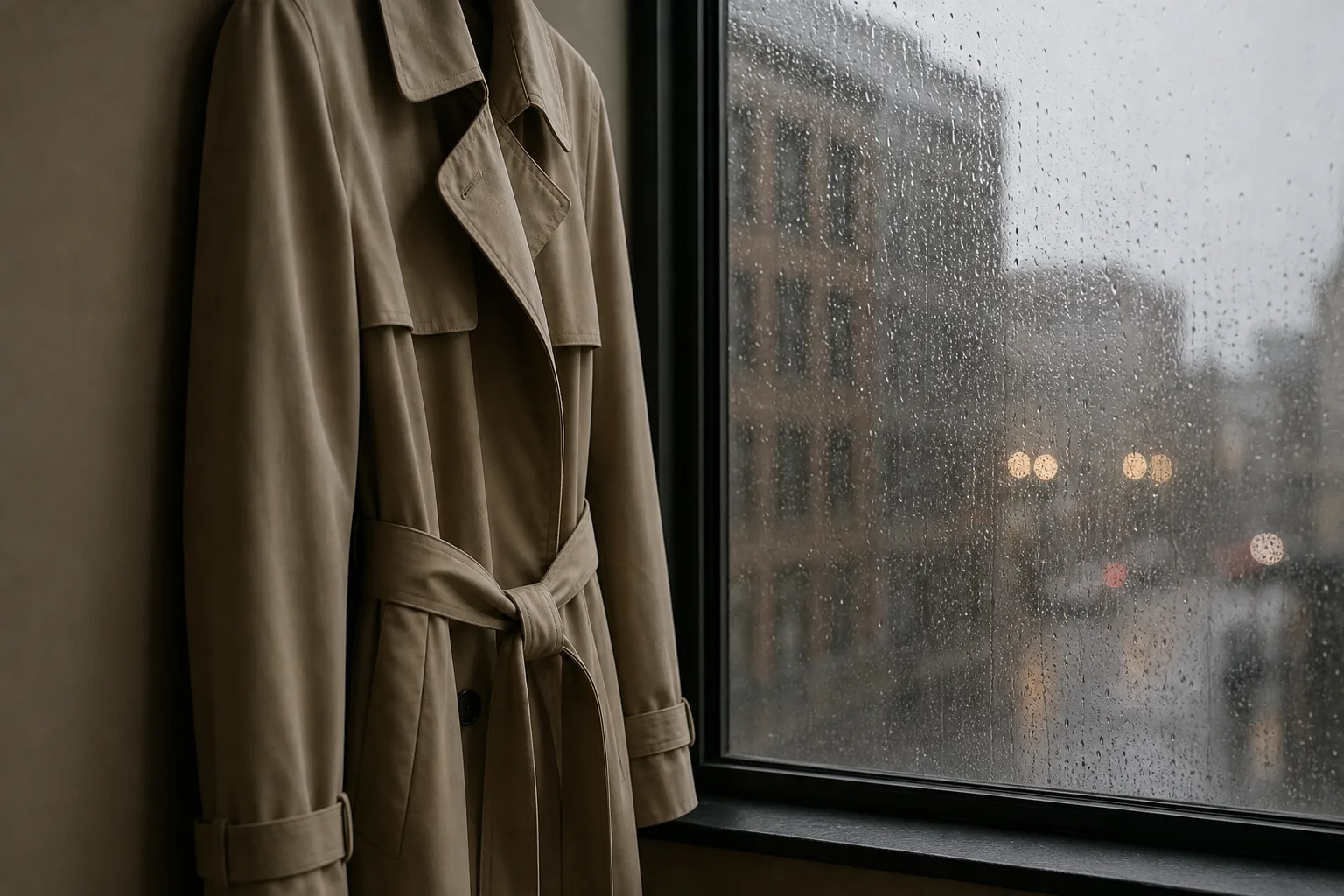
Few garments carry their origin in their name so clearly. The trench coat was worn by British officers in the First World War.
The fabric
In 1879, Thomas Burberry patented gabardine: a very tightly woven cotton, waterproofed thread by thread before weaving. It was light and breathable, unlike the heavy waxed coats of the time. Another English firm, Aquascutum, also claims the coat as its own.
A design with nothing to spare
The buttoned epaulettes held rank insignia and straps. The belt's D-rings were for hanging equipment. The chest flap protected against rifle recoil and water. The back yoke let rain run off. The sleeve straps kept the wind out.
The trench coat is the rare case of a military garment that never had to change to become civilian.
The movies
Back from the war, officers went on wearing it. Hollywood did the rest: Humphrey Bogart in Casablanca (1942), Audrey Hepburn in the rain in Breakfast at Tiffany's, Lieutenant Columbo.
How to choose one
Sand, khaki or navy. Shoulders in the right place; the rest can be loose. Below the knee if you want real protection.
How to wear it
Open, with the belt knotted at the back, over almost anything.
Care
A good trench coat lasts decades if looked after. Always hang it on a wide hanger that will not deform the shoulders. If it gets wet, let it air-dry, away from the radiator. Check the label before washing: many call for dry cleaning, and waterproofed fabrics lose their protection with washing; there are sprays to renew it. And keep the belt rolled up in a pocket: it is the first thing to go missing.