What to buy at the market in November
Pumpkin, mushrooms, pomegranates, persimmons and the first citrus: the autumn pantry of the northern hemisphere and how to use it.
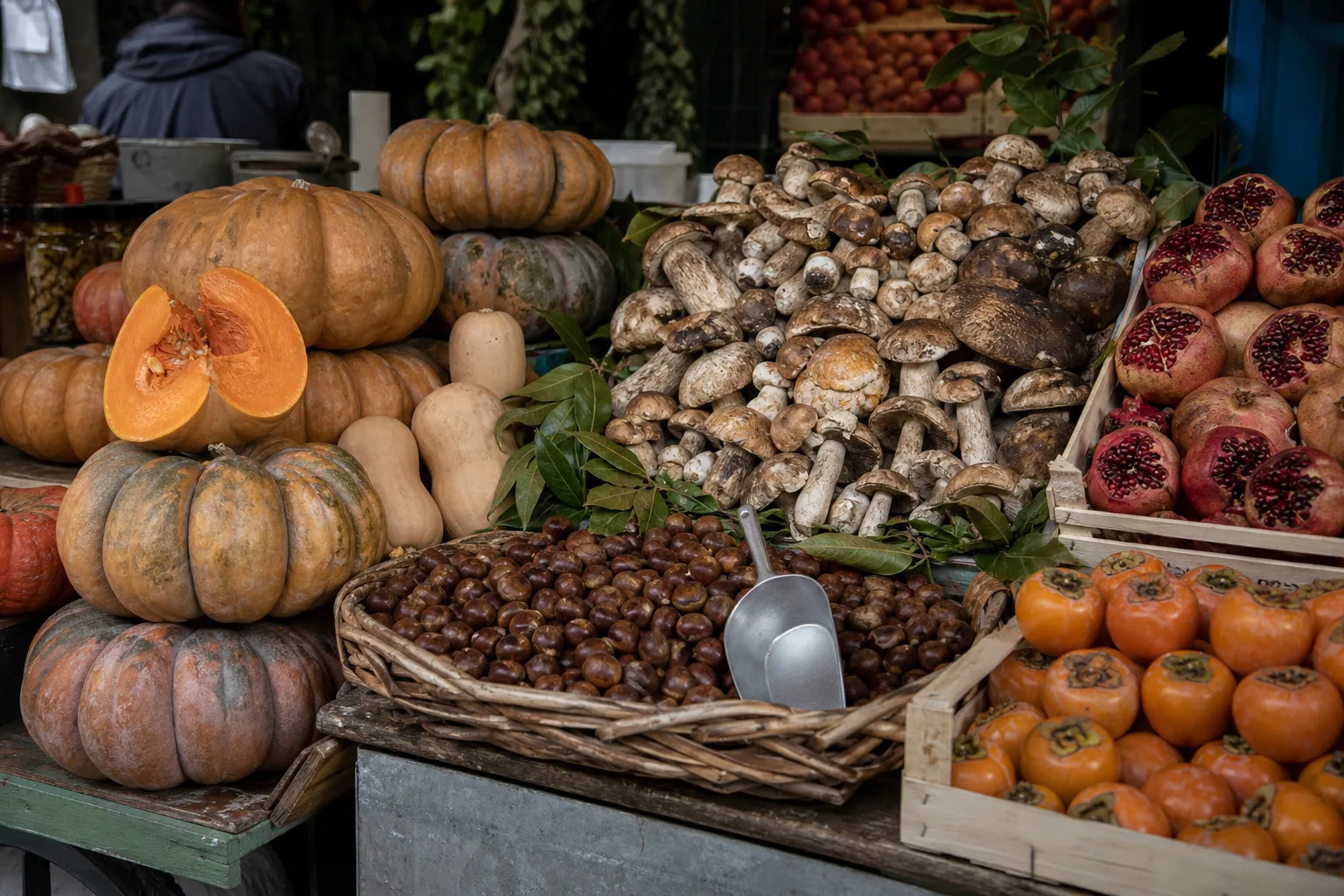
Eating seasonally is cheaper, tastier and simpler than it seems: just look at what is abundant at the market. In November, in the northern hemisphere, this is what is at its best.
Pumpkin and squash
Sweet, cheap and versatile. Roasted with oil and salt, the flavor concentrates; blended with stock it is the easiest soup there is. Whole, it keeps for weeks somewhere cool.
Mushrooms
Saffron milk caps, porcini, king oyster or button mushrooms. Clean them with a cloth, without soaking, and sauté over high heat with garlic. Don't pick wild mushrooms unless you know them well.
Chestnuts and sweet potatoes
Roasted, they are the smell of autumn in many cities. Score the chestnuts before they go in the oven or they will burst.
Seasonal fruit needs no recipe: an open pomegranate is already dessert.
Pomegranate and persimmon
Pomegranate adds acidity to salads and stews; to seed it, hit a half with a spoon over a bowl. Persimmon, when ripe, is eaten with a spoon.
Citrus
The first mandarins and oranges arrive, and will be better still in midwinter.
Leafy greens and brassicas
Chard, spinach, cauliflower, broccoli, red cabbage. A trick for brassicas: roast instead of boiling.
A menu
Pumpkin soup, sautéed mushrooms with egg, and mandarins.
In the south
In the southern hemisphere, the season for asparagus, strawberries and the first stone fruit is beginning.
Why buy in season
Fruit and vegetables in season are picked closer to ripeness and travel less, so they tend to taste better and cost less. They also force variety: each month brings different ingredients and the cooking changes with them. A simple method is to ask at the stall what came in that week and build the menu from the answer.