Why some films are wider than others
From the nearly square frame of classic cinema to IMAX: a short guide to screen proportions.
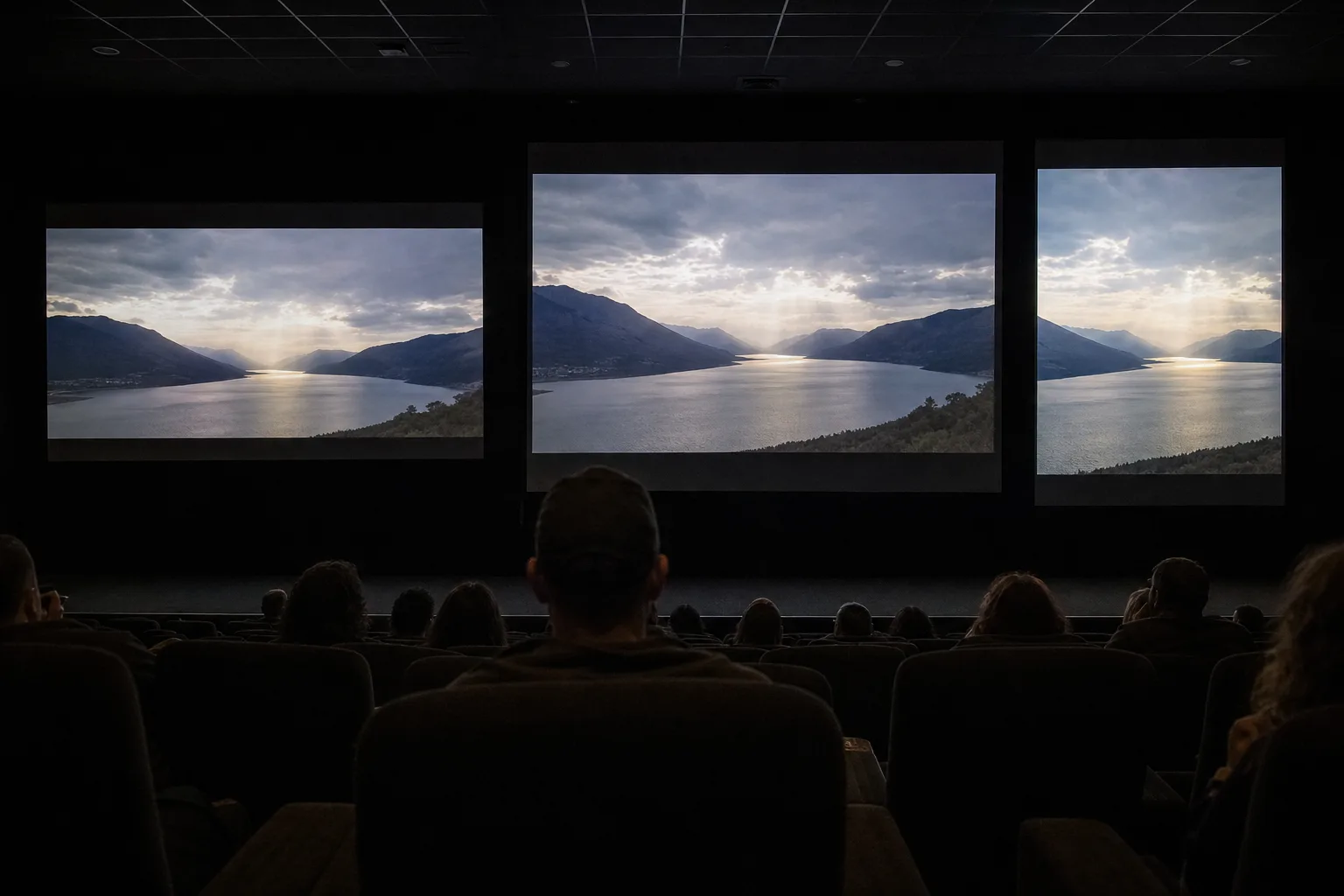
The black bars that sometimes appear on screen are not a mistake. Every film is shot in an aspect ratio, the proportion between the width and height of the image, and that decision affects what we feel.
The main formats
1.37:1, nearly square, was the standard of classic cinema until the 1950s. It favors faces. 1.85:1 is the usual widescreen format for comedies and dramas. 2.39:1, known as scope, is the widest: ideal for landscapes, battles and westerns.
Why cinema got wider
In the 1950s television began to empty theaters. Hollywood answered with bigger, wider screens, such as CinemaScope, offering something you could not see at home.
Format is not a technical ornament: it decides whether we look at a face or a horizon.
IMAX
IMAX cameras use a much larger negative and a taller image, up to 1.43:1. That is why some films, like those opening in the format these days, change proportion from scene to scene.
Back to narrow
Some directors now choose the nearly square frame to create intimacy or confinement. When the screen narrows, it is worth asking what the director does not want us to see.
At home
The black bars on your television are not a flaw: they mean you are seeing the whole image, as it was shot. The opposite — cropping the sides to fill the screen — removes part of the frame. It is also worth checking the TV's menu and turning off "motion smoothing," which makes cinema look like a soap opera. Many directors have asked for this publicly: it is the setting that most changes a film.